
What is an Electric Bug Zapper?
An electric bug zapper is used to kill a number of flying insects such as wasps, mosquitos and flies to keep them away from your kitchen during meal prep.
Also known as a fly killer or insect zapper, the unit will discreetly deal with any pests that pose a threat to food hygiene in a commercial kitchen. A wide range of space-saving models are available, providing different power outputs to cover various spaces and settings. So which bug zapper is best for your business?

How Does an Electric Bug Zapper Work?
Most flying insects are attracted to ultraviolet light as they find it easier to detect than visible light, so this is a common component of all electric fly killers.
As the insect flies towards the light, it reaches the small gap between two electrically-charged wire mesh grids and completes the circuit.
Next, you'll hear a 'zap' as an electric current flows through the insect and vaporises it. The insect husks can then be disposed of hygienically via a catchment tray.
Alternatively, you can use an electric glue board fly killer. Instead of zapping the insect, it is caught and immobilised by the sticky surface instead.
- Effective: kills in an instant.
- Mess-free: dead insect debris drops into an easy-clean collection tray.
- Low maintenance: aside from the occasional bulb change and cleaning, electric fly zappers take very little maintenance.
TIP: Particularly large or stubborn insects may take more than one zap to kill. In addition, not all insects are attracted to ultra-violet light. Just like humans, some flies can be colour blind too!


Where to Put Your Electric Bug Zapper
Coverage
Every electric fly killer will have a coverage rating, usually given in square metres. This is the maximum room area that the bug zapper can operate effectively in. If your room area exceeds the maximum coverage area, you may need more than one fly killer to ensure adequate coverage.
To get maximum coverage, your bug zapper must be positioned in the centre of the room. If it is positioned against a wall, the coverage area is effectively halved. Consider where you will position your unit before purchase.
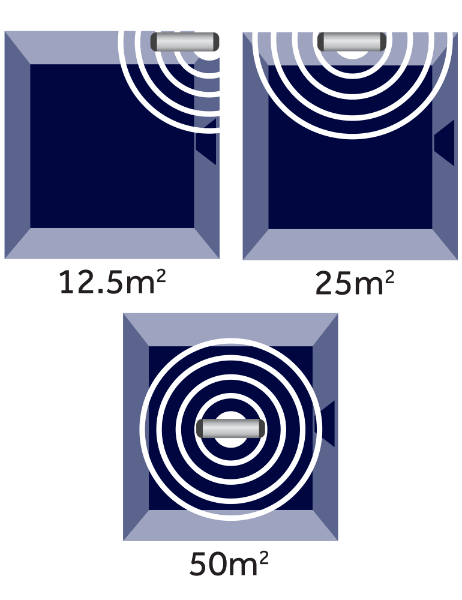
Where Should I Put My Bug Zapper?
- Not visible from outside: The majority of insects come in from outside, so it’s important your fly killer doesn’t entice even more bugs in. Make sure it’s not directly facing doors, windows or even mirrors which face outside.
- Height: The average flying height of insects is around 5 to 8 feet (1.5-2.5 metres). Positioning the unit at this height maximises its effectiveness.
- Not above food prep or dining areas: depending on the size or type of insect, some may ‘explode’ on impact. This is called blow out. As such, its important fly killers aren’t positioned anywhere insect debris could fall into food.
- Away from other light sources: as insects are attracted to bright lights, fly killers can be less effective if they are competing with other light sources.
- Above doors: The ideal position for your fly killer should be between the most likely point of entry and the food. Therefore, just inside and above doors is common, as insects are lured away from prep areas without being enticed into the building.
TIP: A chain door fly screen can be a great first line of defence against flying insects. If you do need to leave kitchen doors open, these allow fresh air in while keeping most flying bugs out.
Bug Zapper Hints and Tips
The effectiveness of your bug zapper depends on its surrounding environment and coverage. However, there are more ways to maximise its performance and reduce the number of flies or other unwanted guests in your premises.
- Move your waste away from the kitchen: Any leftover food, even trace amounts found on packaging, may be attracting flies. If possible, try to keep your bins well away from any meal prep areas.
- Minimise waste: Efficient waste management is vital. Less food waste means fewer flies. Make sure you use commercial grade bin bags and tie them tightly to hide food waste and trash from pests. Make sure to put filled bags straight into outside rubbish bins. If your outside bins don't close tightly, get them repaired.
- Keep it clean: An effective cleaning schedule will make your space less attractive to flies. This should include all your equipment, paying attention to the spaces underneath and behind your cooking equipment. Using professional cleaning supplies also helps to reduce the likelihood of other pests such as rats and mice.
Tip: Find a list of recommended commercial kitchen cleaning procedures in our Ultimate Kitchen Cleaning Guide.
Using a Bug Zapper - FAQs
What is the most effective bug zapper?
For fast, efficient and decisive disposals, Eazyzap fly killers are among the most popular on the market. Various sizes are available, with freestanding or ceiling-mounted designs to suit any kitchen.
How much electricity does a bug zapper use?
Depending on its size, electric fly zappers use between 20W and 45W to power the bulbs and electrified grid. Glue boards use a little less - around 11W.
Why do flies ignore my zapper?
Infrared bulbs can deteriorate over time. If you haven't changed the bulbs in a while, it's likely that swapping them out will get the flies interested again. It's recommended to replace bulbs at the start of spring every year. If you’ve got a brand new zapper which doesn't seem to be luring insects in, make sure there are no other bright light sources nearby which could be interfering with the zapper.
Do fly zappers kill bees?
Although primarily designed to kill flies, other flying insects such as moths and beetles can find their way onto the electric grids too - including bees.
Why are my fly zapper bulbs flickering?
As with all fluorescent bulbs, a small starter sends electricity through the gas inside the tube to provide light. If the starter fails, or isn't fitted correctly, the bulb might not illuminate fully. In most circumstances, you can simply re-seat the starter or replace it if it's faulty.
Can you use fly spray in commercial kitchens?
No. Fly sprays can contain insecticide which causes chemical contamination. Don't use fly sprays in any food preparation or dining area.
Can you use fly paper in commercial kitchens?
Fly paper might be useful in the home, but there's no place for it in a restaurant. Whilst effective at catching flies, fly paper often contains insecticide which shouldn't be in any kitchen.
Are bug zappers safe?
Not for bugs. For everyone else, bug zappers are perfectly safe if positioned correctly and used according to the instruction manual.